That Old Halloween Standby: Outhouse Tipping
During the night of Wednesday, October 21, 1953, a group of six area teenagers overturned three outhouses on a Marion farm. According to an article appearing in the Marion Star the next day, they were eventually tracked down by the sheriff and ordered to “restore [the outhouses] to their foundations.”
Outhouse tipping, it appears, had a long tradition during the Halloween season in Marion County.
In 1897, Marion mayor S. J. Mahaffey warned the town’s young men against “overturning closets” (a polite nineteenth-century word for privies) on Halloween. In 1902, the Star reported that “a few outhouses were turned upside down.” In 1939, Marion’s first Halloween arrest of the season was a 16-year-old North Side boy suspected of upsetting outhouses in the north and northwest parts of the city. And in 1956 five boys participating in “the time-worn prank of upsetting outbuildings” were caught after destroying an outhouse in Martel and had to pay the owner for the costs of rebuilding it.
Why Halloween Means Mischief
These days people often forget about the “trick” half of “trick or treat.” For a long time, however, tricks were an intrinsic part of the Halloween tradition with roots in the Old World. In the Gaelic calendar, Samhain (October 31–November 1) marked the start of winter, and it was seen as a night when spirits and the dead were abroad and the normal rules loosened.
Historian Natalie Zemon Davis has described a broader European tradition of licensed “misrule,” when young men were allowed to play the fool (and sometimes settle scores with unpopular neighbors) at festival times, and Nicholas Rogers places Halloween pranking squarely in that tradition.
In Ireland and Scotland, young men took advantage of this misrule. They would steal gates, set livestock free, damage gardens, block chimneys and tie cottage doors shut from the outside.
Immigrants from these countries brought these customs to America in the nineteenth century, and in small towns and rural areas these traditions continued as classic American Halloween pranks: tipping outhouses, soaping windows, disassembling carriages and then reassembling them in strange locations.
From Soaped Windows to Shotguns: Halloween Pranks from the 1890s to the 1950s
The November 1, 1899, edition of the Marion Star reported that a boy, who was out with his friends “having a Halloween time,” threw a stone through a window of Mrs. John Pfiffer’s home on Patterson Street. Unfortunately for him, she caught the “young miscreant,” whom she knew well. She went to police headquarters the next morning wanting a warrant for his arrest, but since Mayor McClure wasn’t in his office, she said she’d come back after dinner.
Some adults, it seems, were ready to deal with pranksters themselves rather than involve the law. On October 30, 1902, the Star reported that a party of boys “out on a Halloween trip” in the North End ventured onto the property of John Shay. He grabbed his shotgun before going outside to investigate. “Seeing the boys, he fired the gun and they made a hasty exit over the back fence.” While they were climbing over the fence, he fired a second time. According to the Star, “the vicinity was not bothered by any more Halloween parties that evening.”
In an October 1920 Star article titled “Halloween Cut-Ups Keep Coppers Busy,” Police Chief J. W. Thompson complained that his officers had spent several nights breaking up “gangs of youthful Halloween celebrators,” some of whom were “not so young,” and he ordered his patrolmen to arrest boys who were celebrating and lock them up. “If any parents miss their boys at night, they will probably be able to locate them at headquarters,” he added. One of the boys’ favorite “hobbies” that year was starting fires on Marion’s newly paved streets.
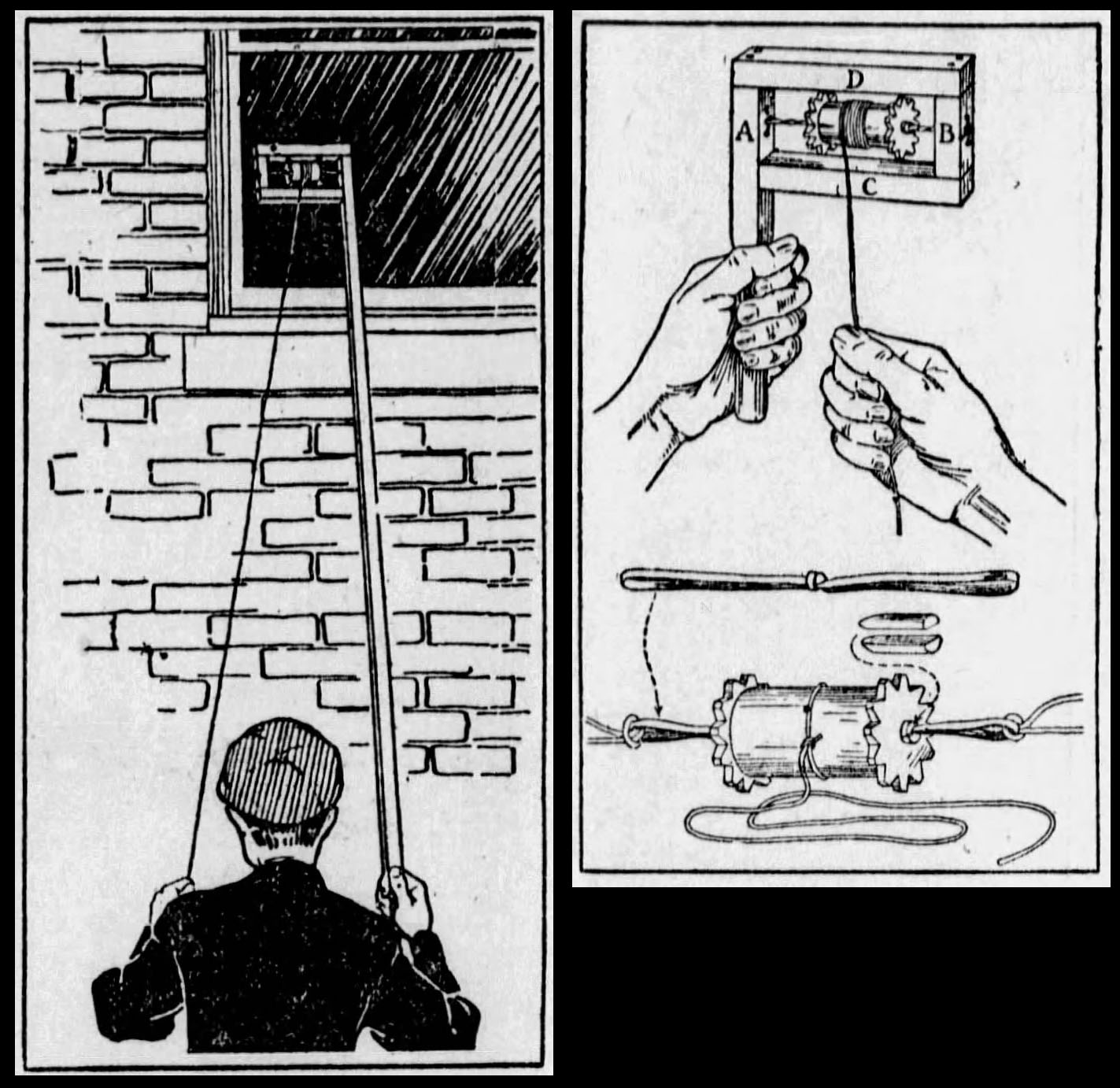
On October 28, 1925, the Marion Star ran an article titled “Marion ‘Bad Boys,’ Now Grownups, Recall Deeds of Deviltry They Performed in Days Gone By; Say Halloween Observance of Present Day is Rather Tame Affair.” The article, which consists of interviews with some of Marion’s “dignified business men,” noted that while the youth of 1925 were content to “parade the streets in costume, ring door bells, throw corn, soap windows and create a disturbance with tick-tacks,” during Halloween, these men once “tore up board sidewalks, carried away gates and sections of fences, placed buggies and wagons on the roofs of buildings, upset woodsheds, wired the doors of houses shut, piled fence rails on front porches, soaped steps and practiced many other jokes that have long been abandoned.”
Their pranks ranged from relatively harmless to cruel:
- Former State Senator Louis E. Myers said his gang in LaRue put a new buggy on top of the schoolhouse.
- Justice Joseph M. Justice said he had pulled so many mean tricks that he hardly knew which was the meanest, but he finally settled on tying two tomcats together by their tails and throwing them over the clothesline at homes where the residents didn’t like kids. “Talk about noise,” he said. “Those cats would rend the air with their cries, and neighbors would wonder what in the world had gone wrong.”
- Judge Grant E. Mouser, who also grew up in LaRue, confessed that he and a bunch of boys and girls once called on a spinster “who disliked callers.” When she finally opened the door, one of them let a head of cabbage fly. It missed her, but she was so angry she threatened to have them all arrested. The threat was hollow, though, as she couldn’t identify any of them.
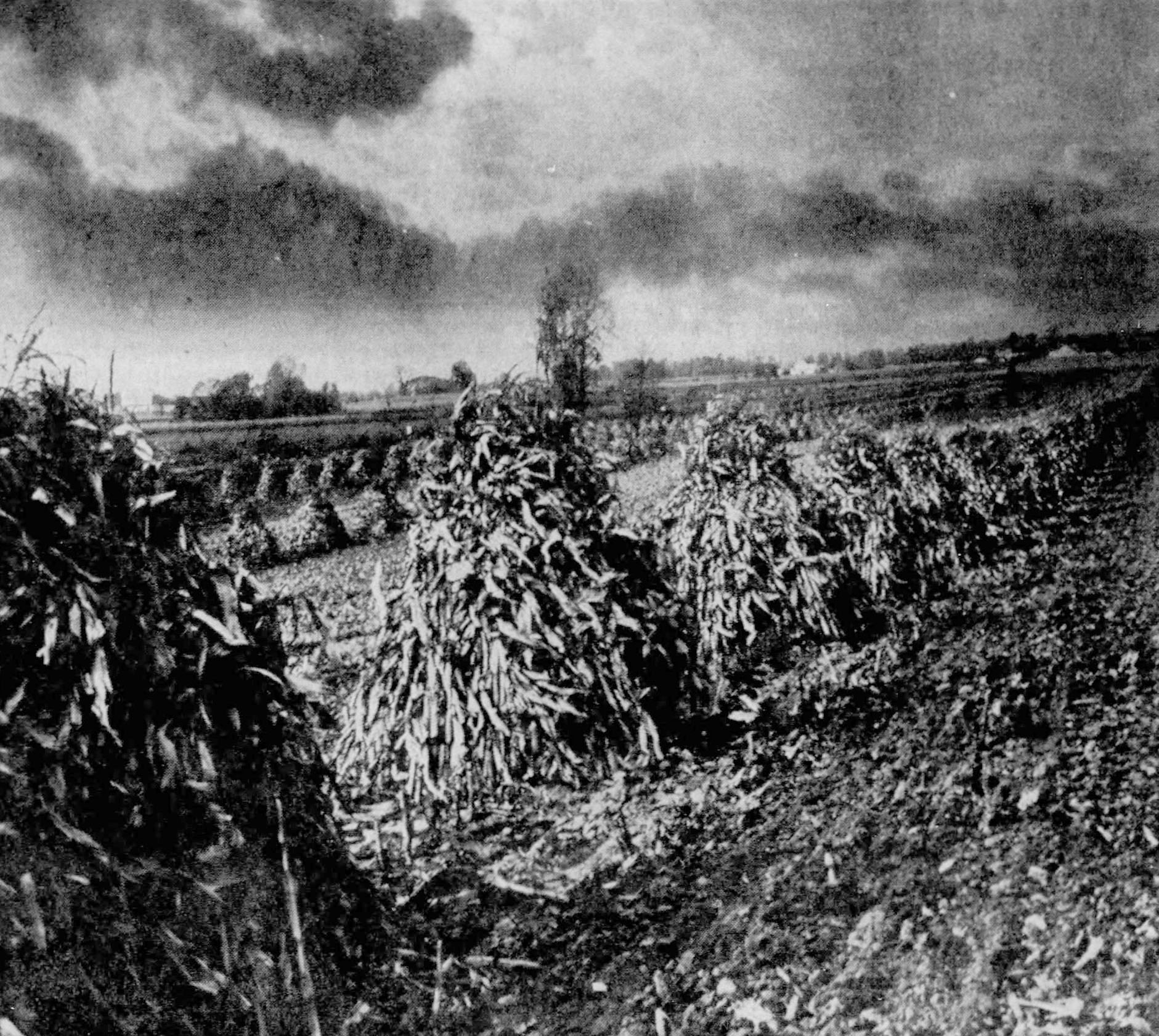
In October 1937, Sheriff Fred F. Miller warned that “a new destructive form of Hallowe’en prank” had appeared in Marion County. Someone had set fire to corn shocks in two fields west of Marion, including seven shocks on Carl Myers’ farm on the Canaan Pike (most likely Marion-Cardington Road). Footprints suggested that the same person had set both fires.
During World War II, the people of Marion had less tolerance for Halloween pranks. In October 1943, juvenile court judge Oscar Gast and Police Chief William E. Marks announced an “absolute ban” on Halloween pranks, declaring that “this is no year for literally turning things upside down.” Everybody, they said, was too busy with the war effort to deal with the bedlam created by pranksters. “What housewife,” they asked, “rushing through her household routine…will have time to wash soap off the window, sweep up corn or rubbish or repair any damage that might result from a Halloween prank?” The Marion authorities meant it, too. A few days later, three boys aged 13 to 15 were sent to the county detention home for pushing over an outbuilding and tying down car horns.
The post-war years saw some particularly vicious Halloween pranks. In October 1946, someone broke into the Green Camp firehouse, scattered the volunteer firemen’s raincoats and equipment around the building, and switched on the fire truck’s lights. By the time a call came in on Tuesday morning, the fire truck’s battery was dead. This was especially unfortunate because several hundred bales of soybean hay were burning at the John Ruth farm on Route 95. Green Camp’s mayor H. D. Kempton responded by lecturing an assembly of boys at the school on “the consequences of willful destruction of property.”
Other pranks were genuinely dangerous. In October 1949, with Halloween still 17 days away, Sheriff LeRoy Retterer reported vandalism from all over the county.
- Near Martel, vandals broke into Clarence Price’s home, smashed windows and doors, and lifted the cover off a deep well. When Price, his wife, and their young son came home, they “stopped in their tracks in the nick of time. With their next step they would have walked into the open well.”
- Near LaRue, vandals were blocking roads with corn shocks. “These actions cannot be considered as pranks,” the sheriff said. “They are a threat to the lives and safety of the public.” His response was to send armed deputies “in fast cruisers equipped with spotlights and shotguns” to patrol the county until “the Halloween ‘prank’ menace is broken up.”
- That same month, a Green Camp farmer named Wallace McNeil reported seven local youths to the sheriff for vandalizing his farm. In retaliation, some of the boys’ friends and relatives — two adults and a youth — showed up at McNeil’s farm the next night and beat him up. The two adults were fined $50 and court costs for assault and battery, while the youth, at the time the article ran in the Star, was still waiting to appear before a judge.
We tend to think of “toilet papering” as one of the more harmless pranks, but in October 1952, a 15-year-old strung rolls of toilet tissue a few feet above Vernon Heights Boulevard near Mount Vernon Avenue. Motorists coming around the corner thought it was a rope and, according to Police Chief Tom Coon, “practically stood their cars on end to keep from hitting it.” The Star reported that the 15-year-old got off with a lecture from the juvenile officer.
Not all of the post-war Halloween pranks were so mean-spirited, though. In the fall of 1952, meat was scarce and prices were sky-high, and one Marion prankster decided to comment on the situation. He scrawled on the window of a South Side grocery store: “Steak—22 cents a pound.” According to the Star, local housewives complained that he had gone “too far.” (For reference, the local Big Bear was advertising sirloin steak at 69 cents a pound that month.)
The End of an Era?
Sometime in the 1970s, the classic Halloween prank started to disappear. Part of the reason was practical. As indoor plumbing reached the last of Marion County’s farmhouses, there simply weren’t many outhouses left to tip over. Brenda Donegan, writing about her childhood in nearby Belle Center in a 2018 Marion Star column, remembered that her grandparents’ outhouse was knocked over every year. Her grandfather “would swear like a sailor as he and his neighbor uprighted theirs.” Mechanized harvesting gradually replaced the old practice of stacking corn in shocks, leaving pranksters with fewer to knock over. Communities also began giving kids something else to do. In 1976, the Star noted that “parades with costume contests and special parties for younger children have replaced the former tradition of ‘trick or treat’ night in the Marion area.” At the same time, national panic in the 1970s and ’80s over poisoned candy and razor blades in apples (which sociologist Joel Best has shown were almost entirely urban legends) made parents much more protective. The result, as Donegan noted, was trunk-or-treat events in church parking lots, where kids walk from car to car rather than roaming the neighborhood after dark.
Still, the old tradition didn’t completely die out. According to the November 1, 1988, Marion Star, someone had been placing an outhouse on the town square in Caledonia every Halloween since the 1930s. “Villagers of all ages look forward to the traditional mark of the Halloween season,” the paper said, “but no pranksters ever are caught, and their identity remains a secret.”
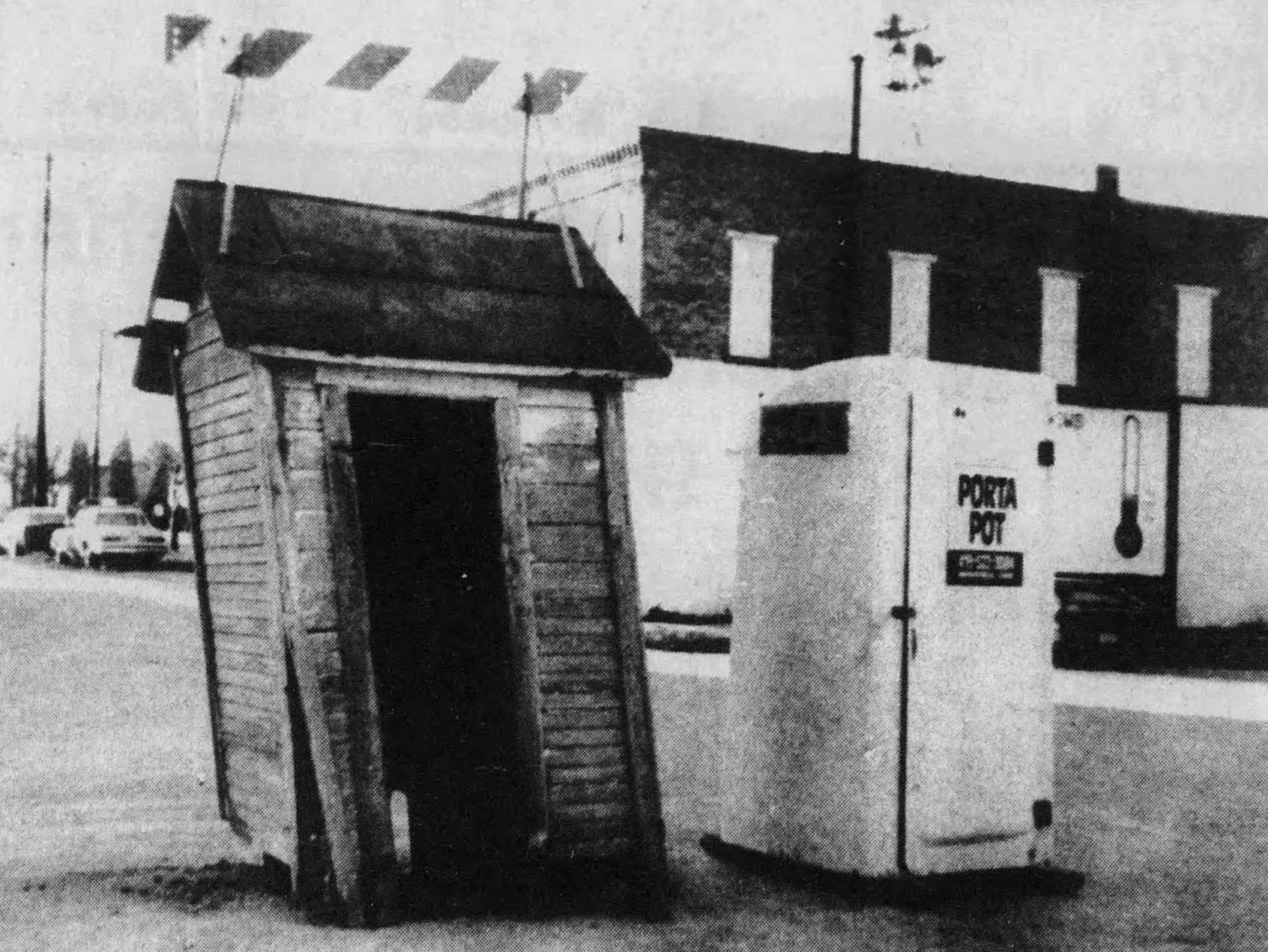
If you have your own Halloween prank stories from around Marion (the statute of limitations has surely run out by now), drop me a line or make a comment below.
Happy Halloween, Marion!
Josh Simpkins
Mahaffey, S. J. “Fair Warning.” Marion Star, 28 Oct. 1897.
“In Police Court: Mrs. John Pfiffer Makes Complaint This Morning.” Marion Star, 1 Nov. 1899.
“Halloween Prank-Playing Youngsters Are Scarce in the Vicinity of the Home of John Shay.” Marion Star, 31 Oct. 1902.
“Young America Up to His Pranks: Corn and Cabbage Are Thrown Last Night.” Marion Star, 31 Oct. 1902.
“Halloween Cut-Ups Keep Coppers Busy.” Marion Star, 16 Oct. 1920.
Hall, A. Neely, and Dorothy Perkins. “Handicraft for Boys and Girls.” De Soto Eagle Eye [De Soto, KS], 4 Nov. 1920.
“Marion ‘Bad Boys,’ Now Grownups, Recall Deeds of Deviltry They Performed in Days Gone By; Say Halloween Observance of Present Day Is Rather Tame Affair.” Marion Star, 28 Oct. 1925.
“New Hallowe’en ‘Prank’ Reported: Corn Shocks Burned in Farm Fields; Sheriff Miller Issues Warning.” Marion Star, 9 Oct. 1937.
“First Hallowe’en Arrest Made Here.” Marion Star, 24 Oct. 1939.
“Authorities Place Absolute Ban on Halloween Pranks.” Marion Star, 11 Oct. 1943.
“Halloween Offenders Sent to Detention Home.” Marion Star, 16 Oct. 1943.
“Halloween Prank Boosts Fire Loss.” Marion Star, 16 Oct. 1946.
Advertisement for Big Bear. Marion Star, 24 Oct. 1946.
“Halloween Prankster Tries Hand at Satire.” Marion Star, 30 Oct. 1946.
“Sheriff Vexed by Vandalism: Halloween ‘Pranks’ Threat to Public.” Marion Star, 14 Oct. 1949.
“Halloween Trouble Leads 2 into Court.” Marion Star, 20 Oct. 1949.
“Youth Gets Lecture from Police after Halloween Prank.” Marion Star, 20 Oct. 1952.
“Halloweeners Rub Soap on Police Window.” Marion Star, 22 Oct. 1953.
“Halloween Pranksters Will Face Prosecution.” Marion Star, 27 Oct. 1956.
Photograph of corn shocks on the Dan and Paul Mautz farm. Marion Star, 20 Oct. 1962.
May, Allen. “Increase Is Reported in Halloween Vandalism.” Marion Star, 19 Oct. 1976.
Dice, Susie. “Halloween Brings Out Pranksters in Caledonia.” Marion Star, 1 Nov. 1988.
Donegan, Brenda. “Knocking Over Outhouses, a Halloween Tradition.” Marion Star, 28 Oct. 2018.
Other Sources Related to the History of Halloween and its Tradition of Pranking
Danaher, Kevin. The Year in Ireland: Irish Calendar Customs. Mercier Press, 1972.
Davis, Natalie Zemon. “The Reasons of Misrule: Youth Groups and Charivaris in Sixteenth-Century France.” Past & Present, no. 50, 1971, pp. 41–75.
Rogers, Nicholas. Halloween: From Pagan Ritual to Party Night. Oxford UP, 2002.